Anxiety & Panic: When the 'Fight or Flight' Switch Gets Stuck
Physical anxiety symptoms often stem from sympathetic overdrive rather than purely psychological causes. When the 'fight or flight' switch gets stuck in the ON position.
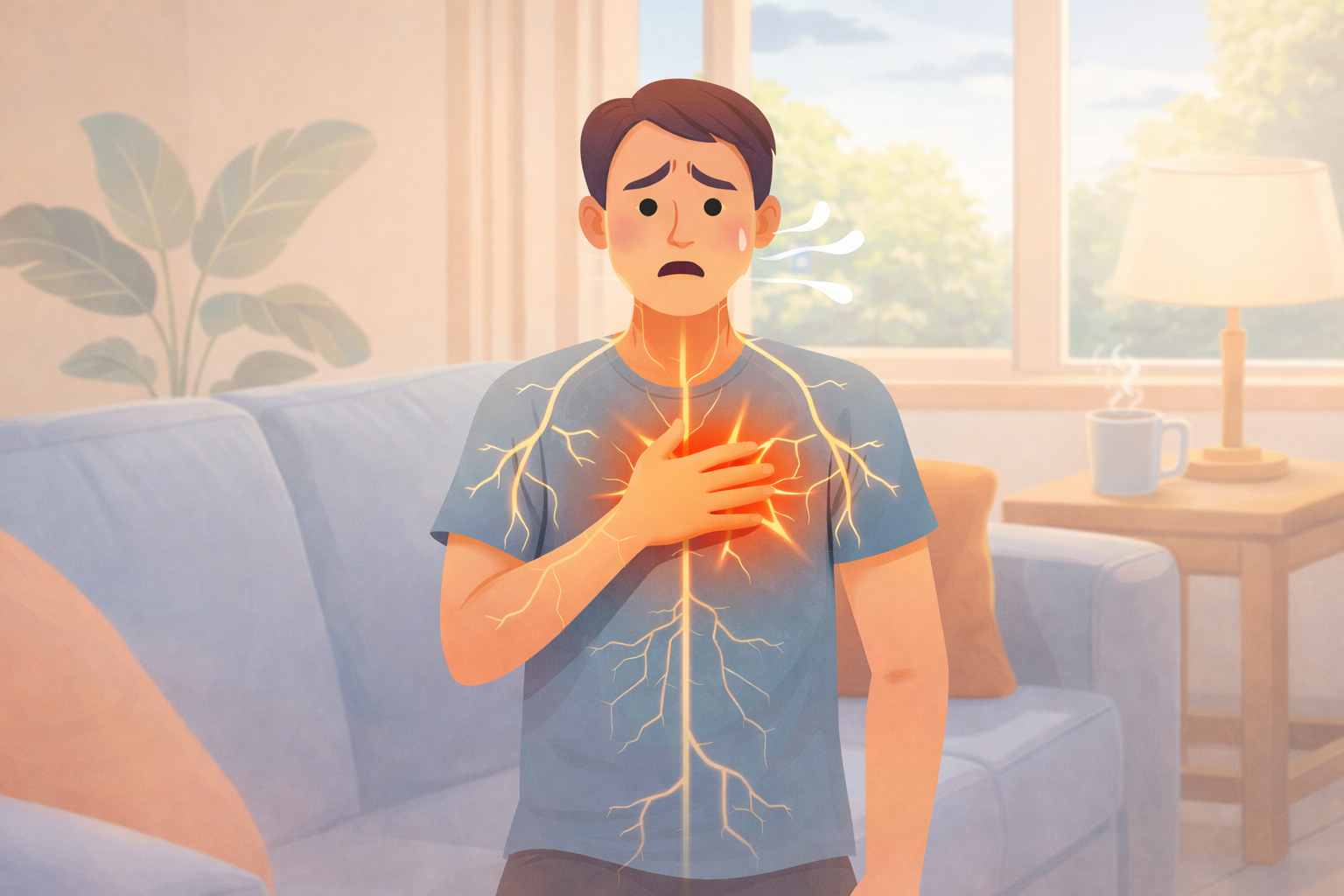
You are sitting on your couch, completely safe. There is no deadline, no argument, no threat.
Suddenly, your heart starts pounding. Your chest tightens. You can't catch your breath. Your palms sweat, and a sense of impending doom washes over you. You go to a doctor, and after running an EKG to ensure you aren't having a heart attack, they offer a diagnosis: Anxiety or Panic Disorder. They may suggest therapy or medication to calm your mind.
But what if your mind was perfectly calm until your body went into overdrive?
Physical anxiety vs. psychological anxiety
The medical system often treats anxiety as a purely psychological or chemical brain issue. But for many people, severe anxiety and panic attacks are actually physical events triggered by the autonomic nervous system.
The symptoms of a panic attack—rapid heart rate, shallow breathing, sweating, tremors—are exactly the symptoms of a massive surge of adrenaline. This is the hallmark of the sympathetic nervous system, the body's "fight or flight" mechanism.
Why does the body sound the alarm?
In a healthy autonomic system, adrenaline is released only in response to actual danger. But in autonomic dysregulation, the threshold for triggering this response is broken.
There are two common autonomic patterns that look exactly like "anxiety":
1. Chronic Sympathetic Overdrive: The nervous system has lost its ability to down-regulate. The parasympathetic "brakes" are weak, so the body is constantly idling at 5,000 RPMs. Even minor stimuli—a loud noise, a shift in posture, a change in temperature—can trigger an excessive adrenaline response.
2. Compensatory Adrenaline Surges: If the autonomic nervous system is failing to regulate blood pressure (for example, failing to constrict blood vessels when you stand), the brain senses a lack of oxygen. To prevent you from passing out, the brain hits the emergency button, dumping adrenaline into your bloodstream to force the heart to pump harder. You feel terrified, but mentally you are fine; your body is simply trying to keep you upright.
The vicious cycle
When the body produces physical panic, the mind instinctively searches for a reason. Why is my heart racing? Is something wrong with my health? Am I going crazy?
This secondary mental fear then triggers more sympathetic activation, creating a vicious cycle.
Understanding that the origin is physiological—that your "hardware" is glitching, not your "software"—can be profoundly liberating. It means the solution isn't just "talking it out" or trying to think your way out of a fast heart rate; the solution involves repairing and retraining the autonomic reflexes themselves.
Autonomic testing is coming soon
By measuring sympathetic and parasympathetic activity, we can differentiate between "anxious thoughts" and "autonomic adrenaline surges." Sign up on our website to be notified when at-home testing becomes available.