Anxiety With Physical Symptoms: A Nervous System View

Many people experience episodes that look and feel exactly like a panic attack.
Their heart races, their hands shake, they feel short of breath, and a wave of impending doom washes over them. Often, they are told these are symptoms of anxiety or a panic disorder. They may be prescribed therapy or anti-anxiety medication.
But for many, something feels off about this diagnosis. These “attacks” often happen when they are perfectly calm, during a pleasant conversation, or even while just standing in line.
In these cases, the issue may not be psychological anxiety. It may be a physiological adrenaline storm triggered by the autonomic nervous system.
When the body triggers “Panic” to survive
The primary job of your autonomic nervous system is to keep you alive and conscious. This requires maintaining a steady supply of blood to your brain at all times.
In certain forms of autonomic dysfunction, the body struggles to maintain blood pressure when upright. Blood pools in the lower body, and cerebral blood flow begins to drop. The brain senses this as a life-threatening emergency.
To prevent you from fainting, the brain triggers a massive release of epinephrine (adrenaline). This adrenaline forces the heart to beat faster and blood vessels to constrict, pushing blood back up to the brain.
This is a survival mechanism. But it comes with a side effect: physical panic.
The sudden surge of adrenaline creates the exact physical sensations of a panic attack—palpitations, tremors, air hunger, and a sense of dread—even if you don't have a single anxious thought.
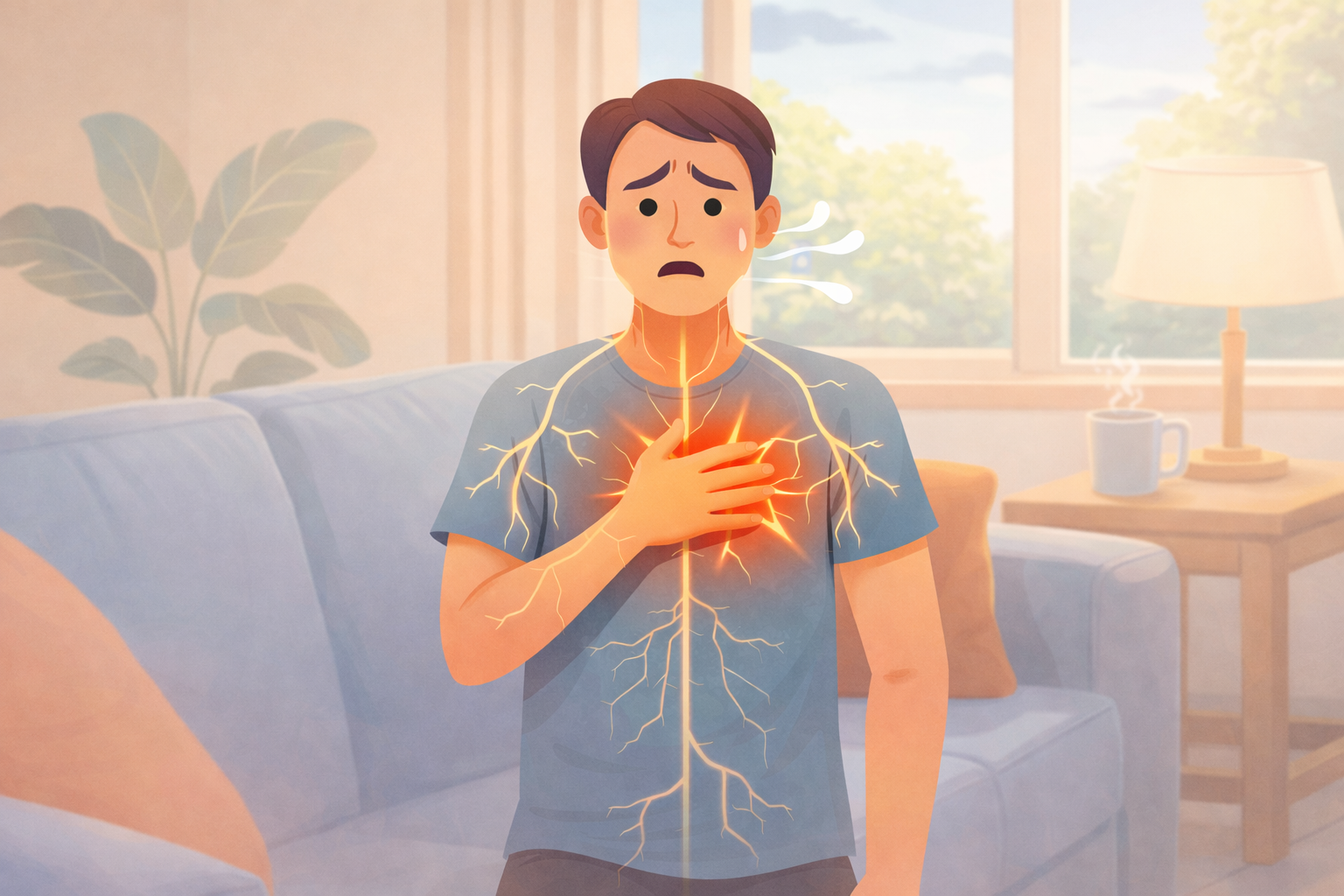
Physical Anxiety vs. Psychological Anxiety
It is essential to distinguish between the two, because the treatment is fundamentally different.
Psychological Anxiety typically begins with a thought, worry, or trigger, which then activates the nervous system. Treatment focuses on cognitive patterns and emotional regulation.
Physical Anxiety (Autonomic) begins with a physiological failure—like poor blood flow or an inappropriate autonomic spike—which then triggers the physical sensation of panic. In this case, your brain is simply interpreting the signal your body is sending. Treatment focuses on stabilizing the nervous system and improving blood flow regulation.
Why it happens at rest
This is often the most confusing part. Why would an “adrenaline storm” happen when you’re relaxed?
It often relates to reciprocal failure. In a healthy system, the sympathetic (gas) and parasympathetic (brake) systems balance each other. In dysautonomia, this balance is brittle. A small physiological shift—like shifting your weight, a light meal, or a minor temperature change—can cause the parasympathetic “brake” to drop suddenly, allowing the sympathetic “gas” to floor itself.
The result is a sudden surge from zero to sixty that feels like a crisis but was actually a regulatory glitch.
The impact of mislabeling
When physiological adrenaline surges are labeled as psychological anxiety, it can lead to years of unnecessary frustration. Patients may feel they are “failing” at therapy because their symptoms persist despite cognitive work. They may feel dismissed by clinicians who attribute complex physical clusters to “just stress.”
Recognizing the autonomic origin of these symptoms is often the first step toward true relief.
Moving forward
If you experience physical “anxiety” that doesn't seem to match your mental state, the most helpful next step is objective measurement.
Autonomic testing can clarify whether your symptoms are driven by physiological mechanisms like sympathetic withdrawal, baroreflex dysfunction, or compensatory adrenaline release.
Autonomic testing is coming soon
At-home autonomic testing is currently in development.
You can sign up on our website to be notified when testing becomes available. Understanding the difference between a racing heart and a worried mind is the foundation of effective care.
Your body has been trying to tell you something. Soon, you’ll have the data to understand it.