Dizziness, Tachycardia, and Orthostatic Symptoms Explained


If you feel lightheaded when you stand up, find it difficult to stand in one spot for long, or notice your heart racing for no apparent reason, you are experiencing orthostatic symptoms.
For many, these symptoms are temporary or mild. But for some, they are persistent and life-altering, turning everyday tasks like showering or grocery shopping into major challenges.
While these symptoms are often dismissed as dehydration or "low blood sugar," they are frequently the visible signs of a deeper struggle within your autonomic nervous system.
Gravity is the enemy
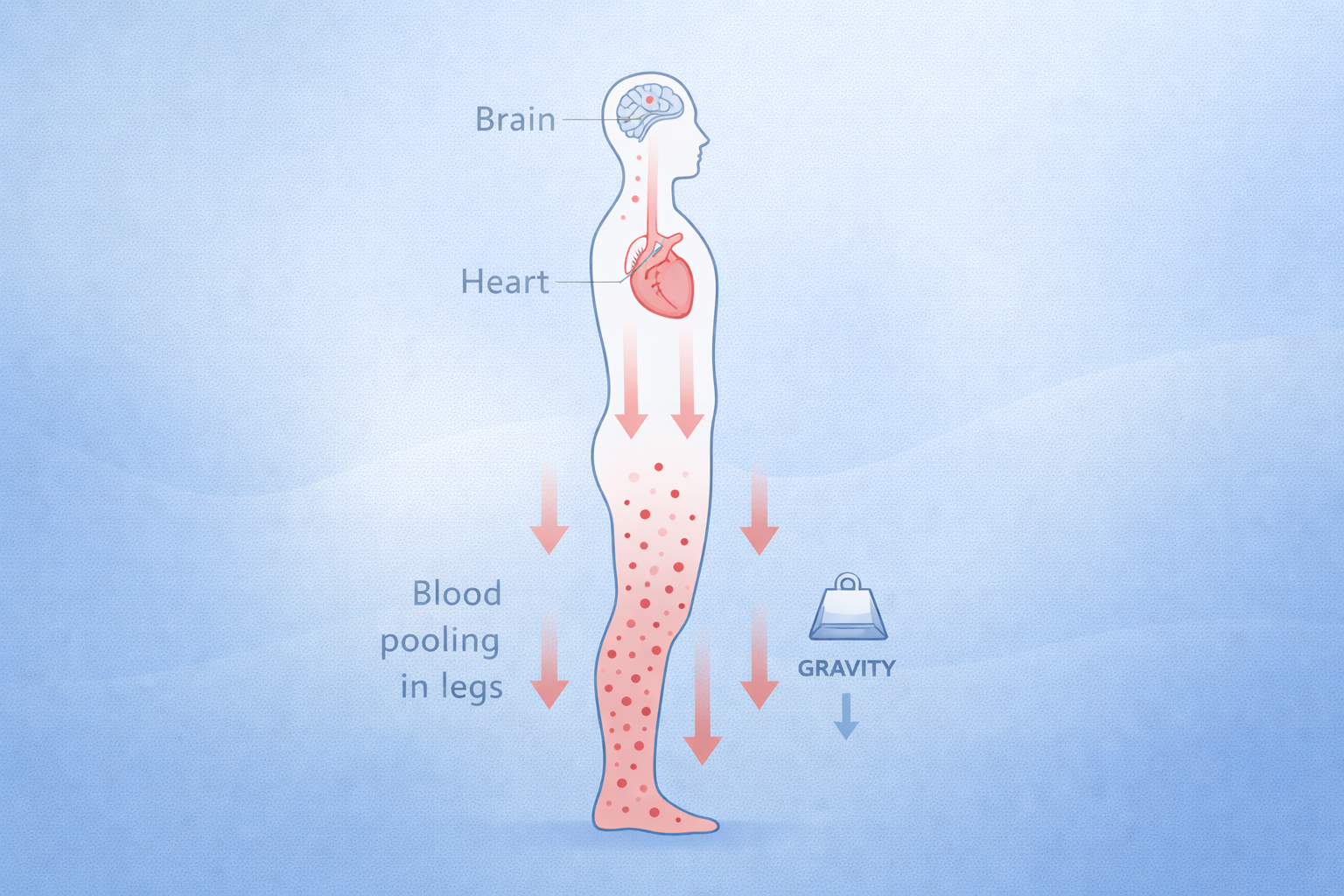
When you stand up, gravity immediately pulls about a liter of blood down toward your legs and abdomen. In a healthy body, your autonomic nervous system reacts in milliseconds. It tightens your blood vessels and slightly increases your heart rate to ensure blood keeps reaching your brain.
In orthostatic intolerance, this reflex is broken. Your blood vessels don't tighten enough, leading to blood pooling. Your brain, sensing a drop in fuel, triggers a "panic" response. It forces your heart to beat much faster (tachycardia) to compensate for the poor circulation.
This is why you feel dizzy—your brain is briefly under-supplied—and why your heart is racing—it's working double time to fix the problem.
The spectrum of orthostatic failure
Orthostatic symptoms exist on a spectrum, including:
POTS (Postural Orthostatic Tachycardia Syndrome): Your heart rate jumps significantly when you stand, but your blood pressure remains stable.
Orthostatic Hypotension: Your blood pressure itself drops when you stand, often causing near-fainting or "vision blackouts."
Syncope: Your system fails to compensate entirely, and you lose consciousness (faint).
Why it fluctuates
Because these are regulatory symptoms, they change based on your environment. Heat makes blood vessels dilate, worsening pooling. Large meals pull blood to the gut, away from the brain. Dehydration reduces the total "fluid" in the system, making compensation even harder.
Beyond the heart
It’s important to remember that the racing heart isn’t the problem—it’s the symptom. The underlying issue is the failure of the nervous system to coordinate the vascular system. Treating the heart rate without addressing the regulation often provides only partial relief.
Autonomic testing is coming soon
At-home autonomic testing is currently in development.
Testing can differentiate between simple dehydration and complex regulatory failures like baroreflex dysfunction or excessive sympathetic activation. Sign up on our website to be notified when testing becomes available.
Don't just track your heart rate. Map your regulation.