Fatigue and Exercise Intolerance Through the Nervous System

For most people, fatigue is the result of a long day, a poor night’s sleep, or physical exertion. You rest, and you recover. Your energy returns.
But for those with autonomic dysfunction, fatigue is something else entirely. It is persistent, heavy, and often completely disconnected from how much rest you’ve had. Even mild activities—like taking a walk or doing a few chores—can trigger a "crash" that lasts for days.
This is often labeled as chronic fatigue or exercise intolerance. But when you look through an autonomic lens, it reveals a specific physiological failure: metabolic and vascular mismatch.
Why exertion feels like hitting a wall
In a healthy body, your autonomic nervous system acts as a smart energy manager. When you begin to move, it instantly increases your heart rate and redirects blood flow to your muscles. It also signals your cells to increase energy production.
In dysautonomia, this coordination is broken. Your heart may beat too fast (tachycardia) or blood vessels may fail to constrict properly, leaving your muscles starved for oxygen even during light movement.
Your muscles are forced to rely on inefficient, short-term energy systems. The result is a rapid buildup of metabolic waste and a feeling of profound, leaden exhaustion. You aren't just "tired"; your body is struggling to produce and deliver fuel in real time.
The Post-Exertional Crash
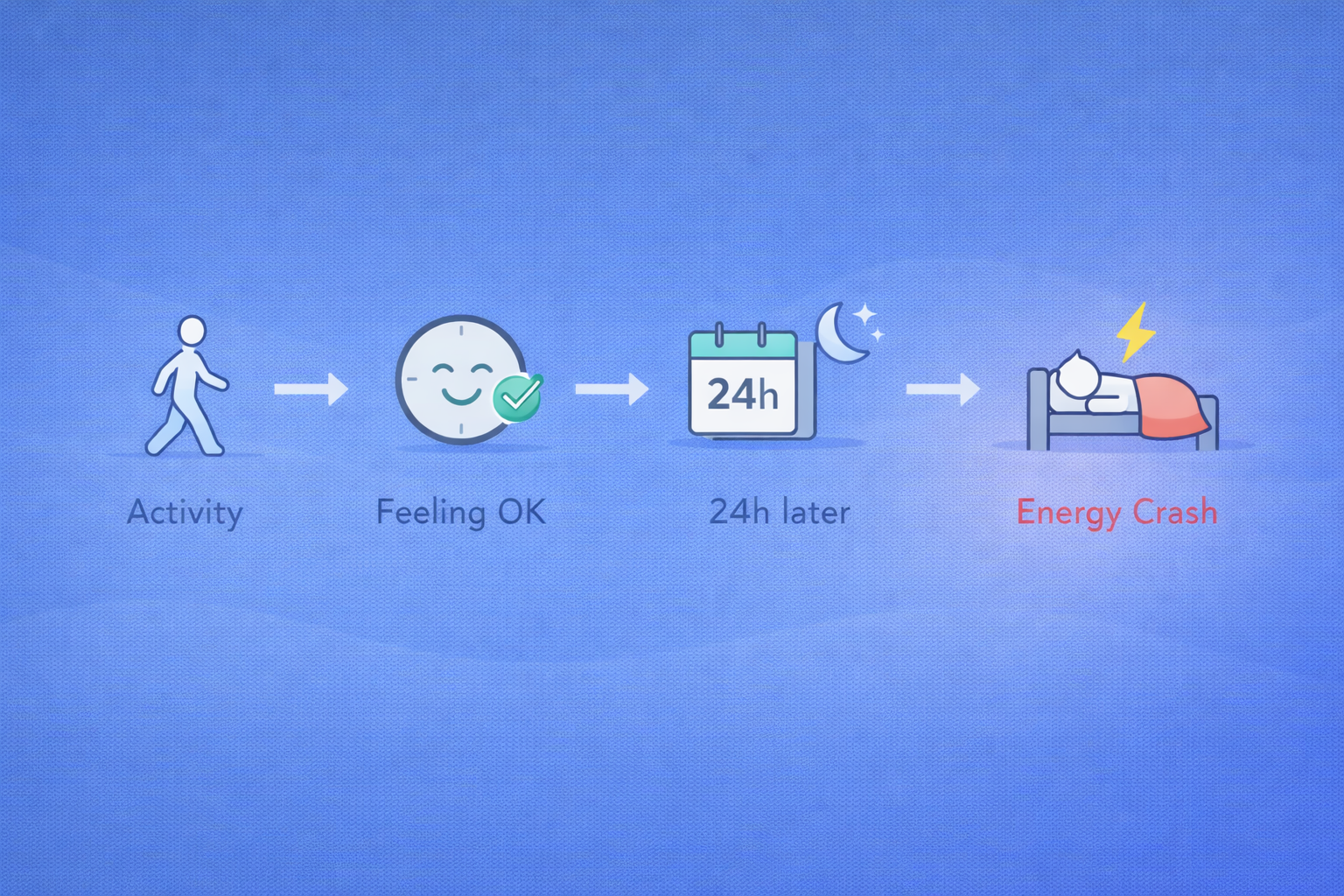
The most confusing part of autonomic fatigue is the delay. You might feel okay during an activity, only to be bedbound 24 hours later. This is often called Post-Exertional Malaise (PEM).
This happens because the effort of the previous day depleted your already-low autonomic reserves. Because your recovery mechanisms (the parasympathetic system) are also impaired, your body cannot effectively "recharge the battery." You wake up in a deficit that compounds with every additional stressor.
Why rest doesn’t always help
Traditional rest is passive. But recovery is active. It requires your nervous system to successfully shift into a deep healing state. If your system is stuck in a state of "high idle" (sympathetic dominance), you can lie in bed for days without actually recovering.
A new approach to energy
Managing autonomic fatigue isn't about pushing through. It's about optimizing your regulation.
This involves pacing (staying within your "energy envelope"), supporting blood volume, and retraining your recovery systems through specific, guided protocols.
Autonomic testing is coming soon
At-home autonomic testing is currently in development.
Measuring your system can reveal if your fatigue is driven by metabolic failure, poor vascular response, or a lack of restorative capacity. You can sign up on our website to be notified when testing becomes available.
Stop guessing about your energy. Start measuring your regulation.