Gut Motility, Nausea, and the Autonomic Connection

The gut is often called the "second brain." This is because it contains an entire network of neurons known as the enteric nervous system. But even the second brain has a boss: the autonomic nervous system.
If you experience chronic nausea, bloating, unexplained abdominal pain, or significant changes in digestion that standard GI tests fail to explain, the issue may not be in your gut. It may be in your regulation.
The Rest-and-Digest failure
Digestion is a highly coordinated process. Your body must move food through the GI tract at a very specific speed (motility), release the right enzymes, and maintain healthy blood flow to the digestive organs.
All of this is controlled by the parasympathetic nervous system, primarily through the vagus nerve.
When you are in a state of autonomic imbalance—often stuck in a "fight or flight" state—your body views digestion as a low priority. Blood is diverted away from the gut to the muscles. Motility slows down or becomes erratic. The result is bloating, nausea, and a feeling of "heavy" digestion.
Why your gut reacts to stress
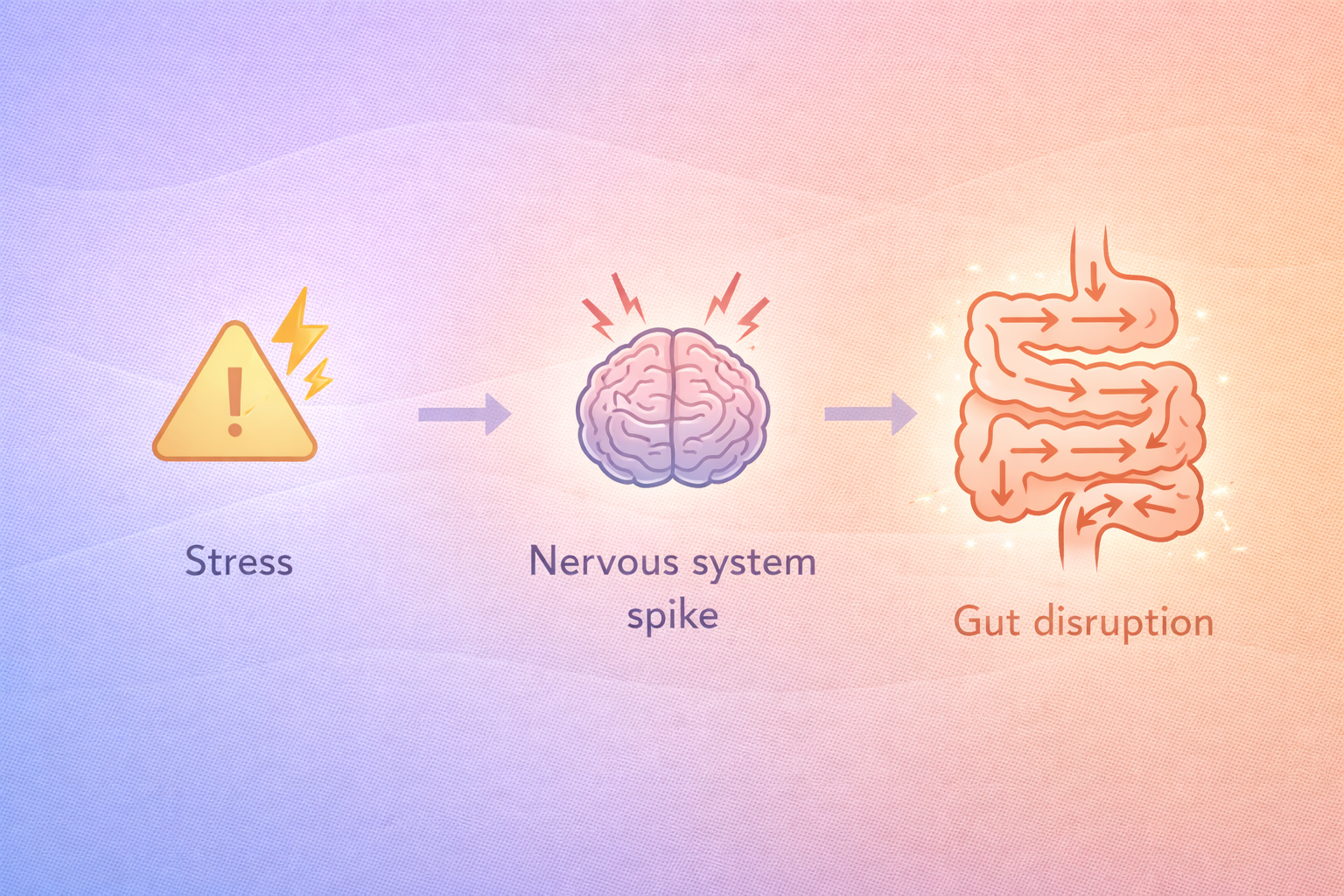
Because the gut and the nervous system are so tightly linked, any sympathetic spike (stress) can immediately disrupt digestion. For those with a brittle autonomic system, even minor daily stressors can trigger significant GI symptoms. This is why many people with dysautonomia also struggle with conditions like IBS or Small Intestinal Bacterial Overgrowth (SIBO), which can be driven by poor motility.
The Nausea-Dizziness link
Many patients notice that their gut issues get worse when they feel dizzy or lightheaded. This isn't a coincidence. If your body is struggling to maintain blood flow to your brain, it will sacrifice blood flow to your gut first. This sudden drop in perfusion can trigger immediate nausea and discomfort.
When GI tests come back normal
Standard GI tests like endoscopies or colonoscopies look for structural problems—inflammation, ulcers, or growths. They rarely look at function—how well the nerves are signaling the gut to move and digest. This is why you might be told your gut is "fine" even when you are in significant distress.
Autonomic testing is coming soon
At-home autonomic testing is currently in development.
By measuring your parasympathetic activity and your body's response to challenges, testing can reveal if your GI symptoms are a result of autonomic dysregulation. Sign up on our website to be notified when testing becomes available.
Understand your gut by understanding your nervous system.