Upstream Detection: Finding Disease Before It Begins
Most medicine detects disease late.
Blood tests measure downstream biomarkers. Imaging detects organ damage. Clinical symptoms appear only after the body has already been under physiological stress for years.
By the time most diseases are diagnosed, the underlying regulatory dysfunction has often been progressing silently.
The problem is not that modern diagnostics are inaccurate.
The problem is that they measure the consequences of disease, not the regulatory systems that maintain physiological balance in the first place.
The autonomic nervous system (ANS) is one of those systems.
The Body’s Control Layer
The autonomic nervous system regulates nearly every major physiological process in the body.
It coordinates heart rate, blood pressure, metabolism, immune signaling, digestion, hormonal balance, sleep cycles, and stress responses.
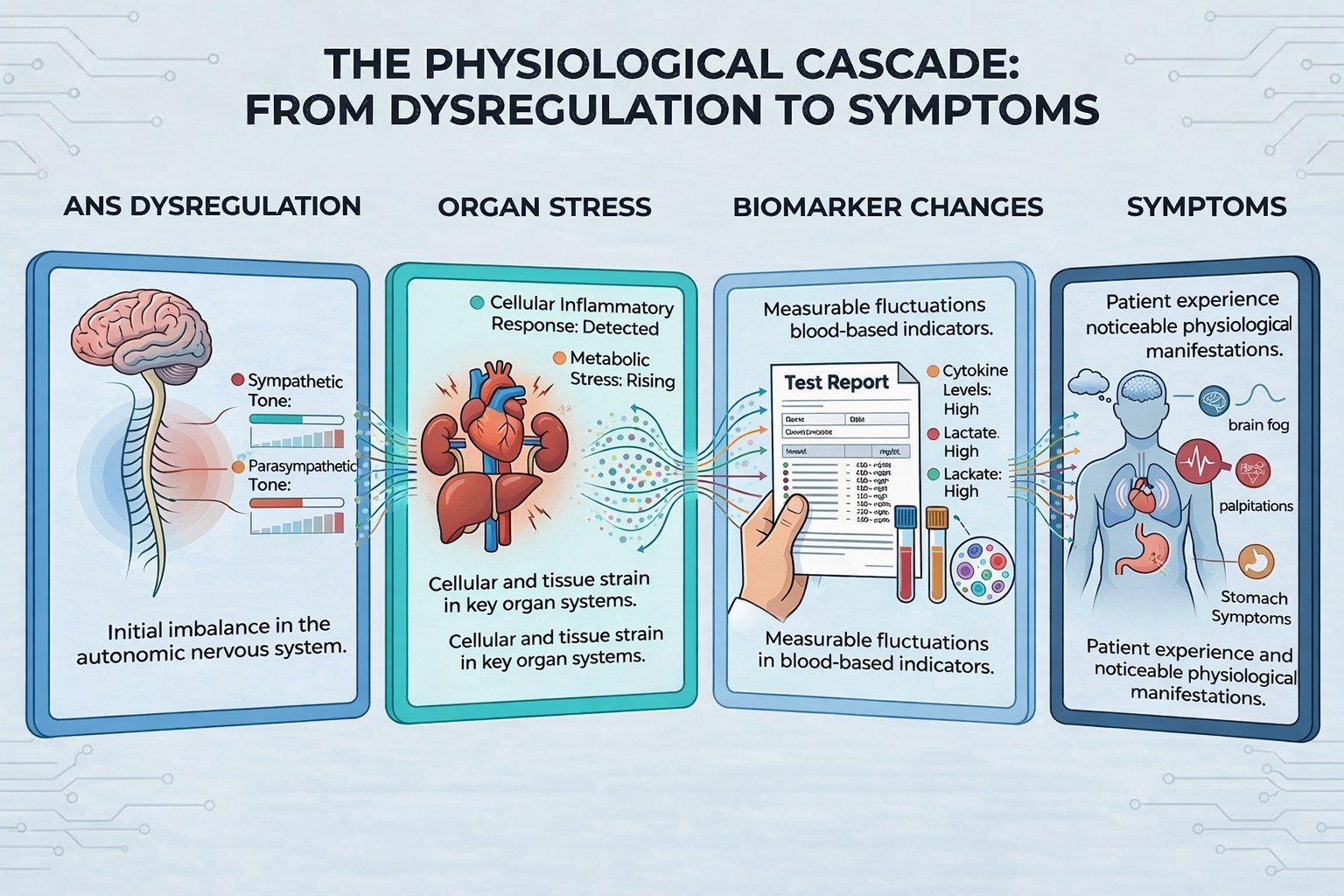
When the ANS becomes dysregulated, the body begins losing the ability to maintain internal stability. This loss of regulatory control can drive dysfunction across multiple organ systems including cardiovascular, metabolic, inflammatory, and neurological pathways.
Importantly, this instability often develops long before traditional biomarkers change.
That means the earliest stages of disease can occur while conventional blood tests and scans still appear normal.
Measuring the First System to Fail
ANS protocols measure how the sympathetic and parasympathetic nervous systems coordinate physiological responses to stress.
These measurements evaluate:
• sympathetic activation• parasympathetic modulation• autonomic reactivity• the system’s ability to dynamically adapt to physiological demands
Loss of this dynamic regulation often appears years before structural disease develops.
Detecting that instability allows clinicians to intervene earlier.
A Different Timeline for Medicine
ANS measurement shifts medicine upstream.
Instead of waiting for organ damage or abnormal lab values, clinicians can identify early regulatory instability and restore physiological balance before disease cascades develop.
This changes the role of medicine from managing disease to maintaining the stability of the systems that prevent disease in the first place.
Autonomic testing is coming soon
At-home autonomic testing is currently in development.
You can sign up on our website to be notified when testing becomes available and take the first step toward understanding how your nervous system is functioning.