Why Autonomic Health Is Following The Path Of Gut And Metabolic Health

A decade ago, most people had never heard the term metabolic health.
Obesity was framed as a willpower problem. Fatigue was brushed off as stress. Blood sugar issues were addressed only after diabetes appeared. Gut health was niche, alternative, or dismissed entirely.
Then something changed.
New tools emerged. Continuous glucose monitors made blood sugar dynamics visible. Microbiome research revealed that digestion was inseparable from immunity, mood, and inflammation. Patterns that had long been dismissed as anecdotal suddenly became measurable.
What followed was not just better treatment, but a shift in how health itself was understood.
Today, autonomic health is at the same inflection point.
The measurement lag in medicine
Medical history shows a consistent pattern: a health category does not become mainstream until it becomes measurable.
Metabolic health remained abstract until glucose dynamics could be tracked continuously. Gut health lacked credibility until sequencing technologies made microbial ecosystems visible.
Autonomic health followed the same path, but with a longer delay.
For decades, clinicians understood that the autonomic nervous system regulated heart rate, blood pressure, digestion, immune signaling, and stress responses. What was missing was the ability to measure the sympathetic and parasympathetic branches independently and dynamically.
That gap has now closed.
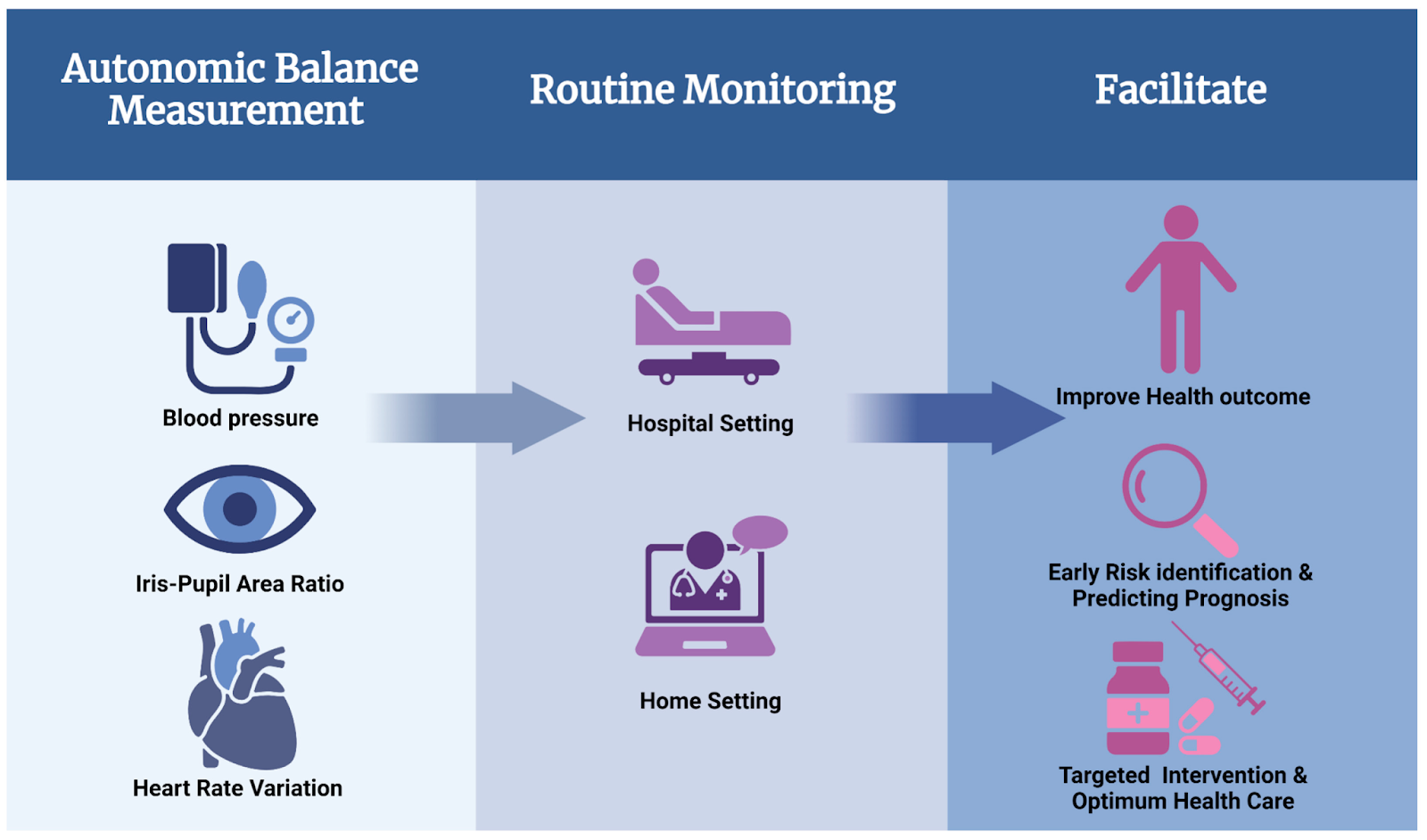
Advances in signal processing and physiological modeling allow autonomic regulation to be quantified directly, transforming a once “invisible” system into an objective metric. Just as CGMs moved metabolic health from annual snapshots to daily insight, modern autonomic testing is moving stress and recovery from subjective experience to measurable physiology.
From organs to regulation: the engine versus the driver
Historically, medicine focused on structural failure.
Heart disease meant damaged muscle. Kidney disease meant declining filtration. Digestive disease meant inflamed tissue. Care intervened once the engine broke down.
What was often ignored was the driver.
The autonomic nervous system controls how organs behave long before they fail structurally. It determines how blood pressure adapts to posture, how glucose is released under stress, how inflammation is regulated, and how recovery occurs after exertion.
Autonomic health is emerging now because it reframes disease as a problem of regulation before it becomes a problem of damage.
In many cases, the nervous system has been compensating for years before structural tests turn abnormal. Measuring regulation opens a window for prevention that organ-based medicine consistently misses.
The multi-system symptom pattern finally makes sense
Long before autonomic health had a name, patients noticed something was off.
Fatigue appeared alongside digestive problems. Anxiety-like sensations overlapped with dizziness and palpitations. Sleep disturbances clustered with immune and metabolic issues. These symptoms were treated as separate diagnoses, often by different specialists, without a unifying explanation.
What gut and metabolic health ultimately revealed is that systems fail together, not in isolation.
Autonomic regulation sits upstream of many of these processes. When it falters, coordination across cardiovascular, immune, metabolic, and neurological systems breaks down simultaneously.
This pattern has become impossible to ignore in conditions like Long COVID and connective tissue disorders, where multi-organ symptoms arise without clear structural damage. Autonomic dysfunction explains why the symptoms are real, widespread, and difficult to localize.
Why “stress” stopped being a useful explanation
Before metabolic health, weight gain was blamed on willpower. Before gut health, digestive symptoms were blamed on sensitivity. Before autonomic health, unexplained symptoms were blamed on stress.
But stress is not a diagnosis. It is a description of load without insight into capacity.
Two people can face the same demands. One adapts and recovers. The other accumulates symptoms. The difference is not mindset. It is regulation.
Autonomic health reframes stress as a physiological process that can be measured, tracked, and understood. This mirrors the shift metabolic health created when energy balance moved from blame to biology.
Static labs miss dynamic failures
Most routine medical tests measure the body at rest.
But regulation fails under challenge.
Blood pressure can be normal while sitting yet collapse upon standing. Heart structure can be normal while heart rate control is impaired. Labs can appear healthy while exertion tolerance is severely reduced.
Autonomic dysfunction is dynamic. It reveals itself during transitions, not snapshots.
Moving from static labs to dynamic assessment shifts diagnosis earlier in the disease timeline, from late-stage pathology to early functional decline.
Why technology changed the timeline
Gut and metabolic health took decades to become mainstream because the tools developed slowly.
Autonomic health is moving faster.
Wearables now collect continuous physiological data at scale. Advanced signal processing separates regulatory patterns that were previously inseparable. AI models interpret responses across time rather than relying on single values.
For the first time, autonomic function can be assessed outside specialized clinics and integrated into everyday life.
This is why autonomic health is not emerging gradually. It is accelerating.
Completing the trilogy of preventive care
Modern healthcare is moving from episodic snapshots to continuous insight.
Autonomic health completes a trilogy:
Metabolic health explains energy and fuel
Gut health explains digestion and immunity
Autonomic health explains regulation and resilience
Together, they offer a systems-level understanding of how the body adapts long before disease appears.
At Autonomic Health, the mission is to make autonomic regulation measurable and actionable, so individuals are not forced to wait for structural damage before receiving clarity.
Why testing changes everything
When regulation can be measured, it can be protected.
Autonomic testing enables early identification of imbalance, tracking of recovery, and personalization of care. It transforms vague symptoms into interpretable signals.
This is the same transition gut and metabolic health already made. The difference now is readiness.
The demand exists. The tools exist. The missing system is finally visible.
Autonomic testing is coming soon
At-home autonomic testing is currently in development.
You can sign up on our website to be notified when testing becomes available and be among the first to explore this next frontier in preventive health.
Every major shift in medicine begins by seeing what was previously invisible.
Selected references (for those who want to go deeper)
Topol EJ. Deep Medicine: How Artificial Intelligence Can Make Healthcare Human Again. Basic Books (2019).
Turnbaugh PJ, et al. The human microbiome project. Nature (2007).
Zeevi D, et al. Personalized nutrition by prediction of glycemic responses. Cell (2015).
Freeman R. Assessment of cardiovascular autonomic function. Clinical Neurophysiology (2006).
Goldberger JJ, Arora R, Buckley U, Shivkumar K. Autonomic Nervous System Dysfunction: JACC Focus Seminar.Journal of the American College of Cardiology (2019).
Raj SR, et al. Long-COVID postural tachycardia syndrome. Clinical Autonomic Research (2021).
Colombo J, Arora RR, DePace NL, Vinik AI. Clinical Autonomic Dysfunction: Measurement, Indications, Therapies, and Outcomes. Springer (2014).